
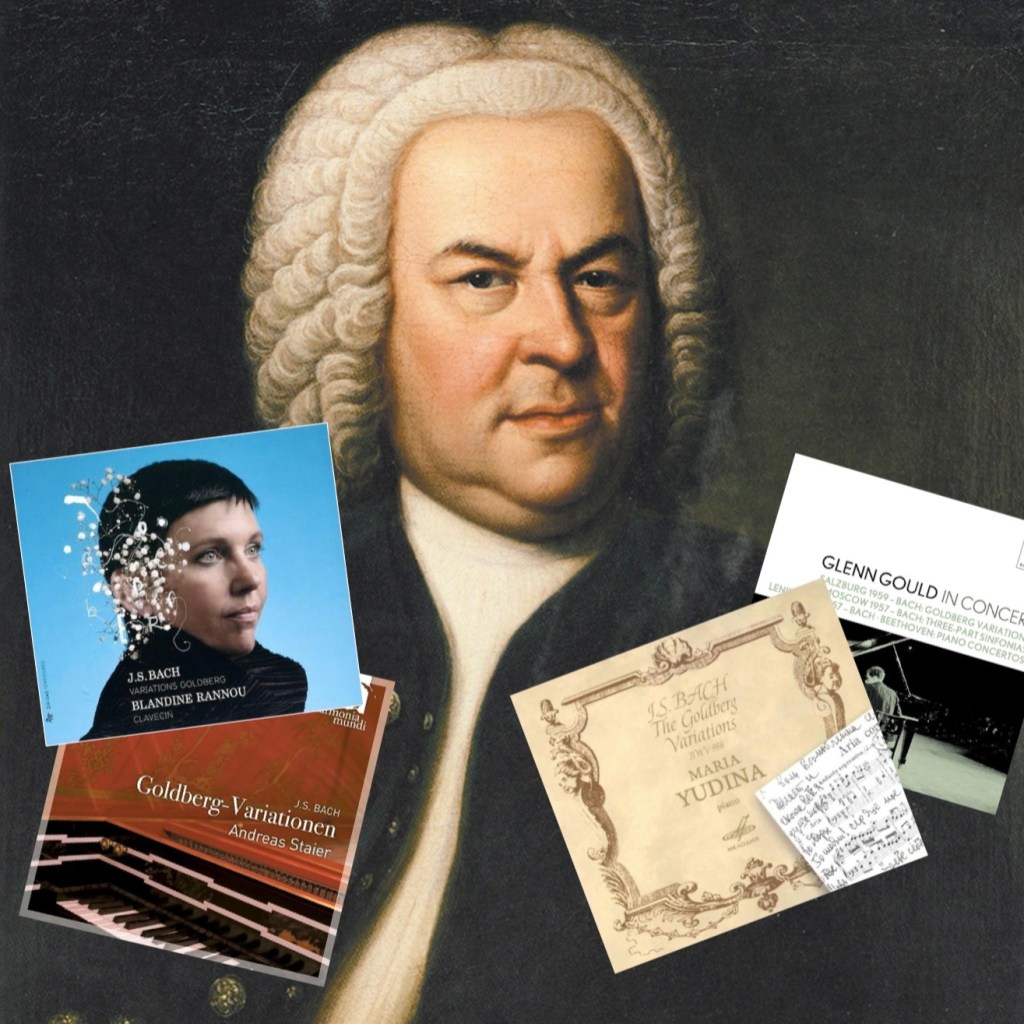
Quite recently, harpsichordist Julien Wolfs brought out a fabulous version of the Goldberg Variations. It was totally refined, beautifully expressive, full of arpeggios, so essential that ornamentation would have seemed superfluous. But listening to it recently I realised – again, in fact – one thing: the Goldberg Variations make me sad. I’m not saying there’s no joy in it, but I always come out of it smeared, much sadder than when I started. It’s so beautiful that I’m always, or almost always, very happy to start them. So, of course, there’s something beautiful about being moved. But this emotion is not synonymous with sadness for me in any of Bach’s works. Even when I listen to the first sonata for solo violin, or the Passions, or even the Art of the Fugue, I don’t feel any sadness. On the contrary, it’s almost purifying. It leaves the negative behind. Bach makes a ball of negative emotions and changes them into assent taken to perfection. It’s brilliant. That’s Bach, in a nutshell. But it doesn’t do that to me with the Goldbergs. And yet there’s plenty of swing in it – listen to Variations Nos. 1, 4, 5, 8, 27, 28 !
And it’s not just a question of depth or truth. Of course Bach is touching on something, a thread that he stretches and uses to dig deep into the human soul – I couldn’t think of any other way to express it. But there’s also something very human in these variations. It’s alive, variable, changing, and sometimes it even seems so futile that, paradoxically, it seems to refer to the most necessary truth, without me even knowing what it is. You listen to Gould playing the Goldbergs, and then you go through every possible emotion, it’s magnificent but it’s exhausting! It’s magnificent, but it’s exhausting! It’s almost as if you’re going through the ages of life… All joking aside, how can you go to sleep with that? That’s what the legend says, though.
And if the Goldbergs make me sad, I have to admit that I listen to them often. The counterpoints seem to bring out something that’s been lying dormant, and maybe that’s why I’m so excited. And I don’t want to believe that it’s only the Aria da capo that brings the whole thing to a close that makes me sad. It’s not enough. Especially as I see a certain appeasement in it. And then I’m sad when I finish the piece, but I always have a smile on my face. That must say something about this work, I’m sure I’m not the only one. That’s the thing about Bach, I think, is that you can universalise the emotions you feel when you listen to him, and yet the Goldberg Variations are such a personal work that I’ve never heard anyone say the same thing about it.
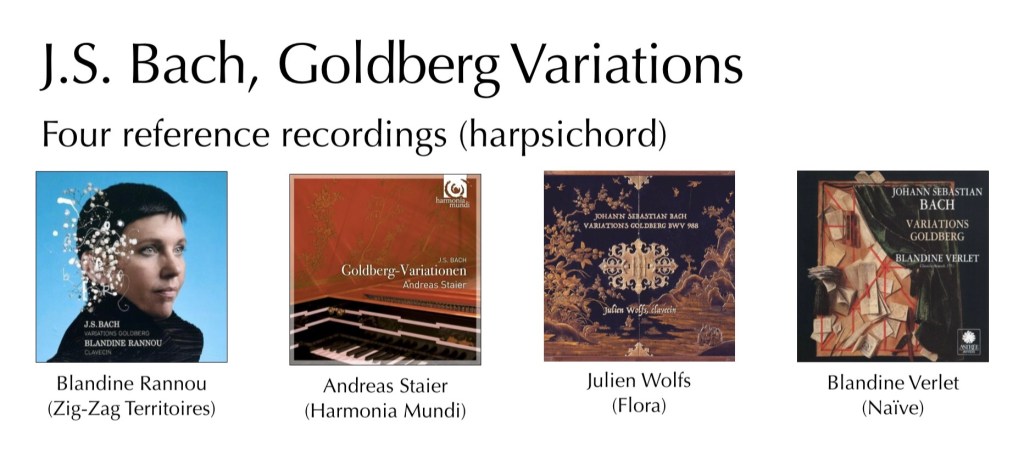
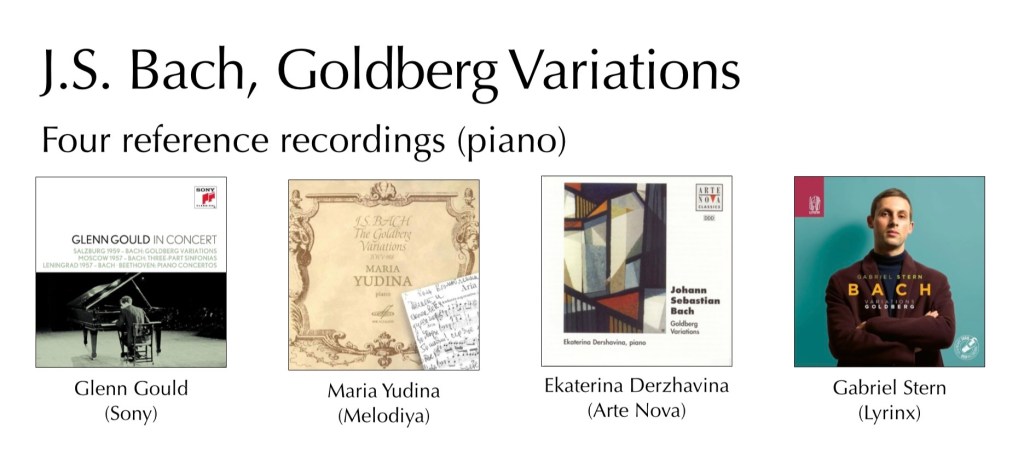
And it’s so personal that you can feel it in the interpretations. Between Glenn Gould and Maria Yudina, does one have the impression of hearing the same work? Or even between Ekaterina Derzhavina and Gabriel Stern, to cite two versions that are a little close to the interpretation canon. And the differences between harpsichordists are even more abysmal, between those who raise the orchestral masses in the ornamentation, like Andreas Staier or Blandine Rannou, and those who favour the rigorous intelligibility of the text and the melody, like Gustav Leonhardt or Blandine Verlet. Each interpretation can provoke radically different emotions. In any case, as far as I’m concerned, I always end up sad at the end.
I discovered the Goldberg Variations very early on, and it was one of the first works I listened to when I was a teenager. And it was one of the only Bach compositions I listened to – I thought the Cantor’s music was too perfect! But it’s not that these variations are imperfect, it’s that they are human. They’re not ideal, but they’re a reflection, a mirror for the person listening to them – and I imagine the person playing them, I’m not a musician. When Rudolf Serkin was on his deathbed, he played the Aria on the sheet. When he was younger, he even played the whole piece as an encore! Artur Schnabel was one of the few who stayed until the end. I don’t know if I could have done it, it’s such an investment. The Goldbergs are tough. But some emotions are worth living through, not going through.
 Sofronichrist
Laisser un commentaire