
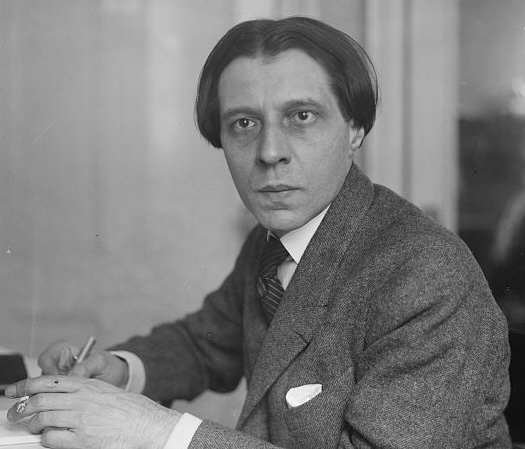
On 13th January 1958 and 4th June 1959, Alfred Cortot recorded this commentary on Beethoven’s Moonlight sonata, Op.27 No.2. In the order of the article, the French transcription is presented, followed by the English translation.
The Masterclass with the commentary in French
Original version / Transcription originale en français
Sonate Quasia una fantasia, Opus 27 Numéro 2, dite du « Clair de Lune ».
I. Adagio sostenuto
Adagio sostenuto en Ut dièse mineur en C barré, et non à quatre temps mais cependant à la cadence de soixante à la noire. Avant que d’aborder sous l’angle du commentaire instrumental l’étude analytique de cette seconde sonate de l’Opus 27 dont Beethoven nous prévient qu’elle est, de même que celle qui précède, conçue sous le signe de l’improvisation, et qui partage avec la « Pathétique » et l’ « Apassionata » le redoutable privilège de se voir inscrite d’office dans le répertoire de tous les pianistes, on voudrait mettre en garde l’éventuel usager de ce disque contre l’adoption des deux fictions traditionnelles et également erronées qui n’ont cessé d’en suggérer la traduction imaginative. En premier lieu la version anecdotique qui consiste avec une affligeante banalité romanesque à figurer la douloureuse méditation du sublime Adagio initiale sous les aspects d’une promenade en barque sur le lac des quatre cantons, et on est ici en droit de se demander pourquoi celui-là plutôt qu’un autre, d’où la dénomination hélas universellement admise de « sonate du clair de lune » reportée sur l’ensemble de l’oeuvre. Et encore qu’ici on puisse à première vue s’en remettre à un accord plus valable avec le caractère expressif fondamental d’un bouleversant message émotionnel par l’acceptation de la croyance qui ont fait dépendre l’inspiration première du choc ressenti par Beethoven lorsqu’il se voit tenu de renoncer au rêve exalté d’une union possible avec la dédicataire de l’oeuvre immortelle, son élève du moment, la jeune Comtesse Julietta Guicciardi, mais cette supposition se trouve à son tour entièrement démentie par le seul fait matériel de la rédaction de la sonate, laquelle se voyait complètement achevée et même publiée antérieurement à la cruelle déception dont il devait longuement porter le deuil. Et, selon moi tout au moins, ce serait par une référence impressionnante au déchirant document connu sous la désignation de testament d’Heiligenstadt, dont la rédaction est contemporaine de celle de l’œuvre qui fait l’objet de ces remarques préalables, qu’il conviendrait de s’en remettre, pour tenter d’établir un contact spirituel compréhensif avec l’état d’âme dans lequel se trouvait en 1802 celui qui se voulait le frère de tous les humains et auquel la certitude désespérée de se voir désormais à jamais privé par l’évidence d’une incurable infirmité de tout rapport social avec les êtres qui l’entouraient mais lui infligeait en supplément cette torture terrifiante au regard de son art de ne plus pouvoir entendre les moindres résonances de ses chants qu’il portait en lui et qui n’ont plus de réalité que dans son imagination. Et maintenant, et en y recommandant comme introduction indispensable la lecture du texte désolé auquel on croit pouvoir assigner une étroite concordance avec la signification intérieur du chef d’œuvre, on souhaiterait que les remarques suivantes accordées à la traduction pianistique se puissent de légitimer l’hypothèse interprétative à laquelle on vient de se reporter. Tout d’abord, concernant « Adagio sostenuto » auquel l’adjonction par Beethoven d’un significatif indice cadenciel de C barré qui se doit d’y proscrire l’adoption du tempo languissant auquel se soumettent trop souvent les exécutions exagérément sentimentalisées et qui devraient par suite s’identifier à une énonciation rythmique d’environ soixante à la noire ainsi qu’on l’a mentionné au début de ses observations. D’autres prescriptions beethovéniennes se devront d’y être envisagées en tenant compte des ressources actuelles de la facture pianistique, comme par exemple cette recommandation liminaire en italien dont voici la traduction approximative : « tout ce morceau doit être jouée délicatement et sans l’emploi de la sourdine ». On ne croit pas superflu de rappeler que l’usage de celle-ci au moment de la composition de cette sonate consistait à interposer entre la corde et le marteau une bande de feutre qui en altérait le timbre d’une manière très particulière et qui ne saurait être assimilée aux pénétrant au résultat expressif obtenu dans les instruments actuels par la mise en action de deux cordes sur trois de leur registres moyens permettant par sympathie sonore la discrète vibration complémentaire de la corde non utilisée. Donc on ne peut qu’y conseiller l’emploi simultané des deux pédales, seules capables d’y créer l’atmosphère d’enveloppement harmonique duquel se détachera par une pression constamment sensibilisée des quatrième et cinquième doigts de la main droite l’énonciation pathétique d’une plainte sans espoir et dont l’exemple suivant voudrait s’employer à souligner les modalités. Exemple musical :
Exemple musical
Puis viendra l’épisode médian au cours duquel et pendant quelques mesures le dessin d’accompagnement triolet abandonne son principe organique de fixité mélodique pour s’aventurer à l’image fictive d’une frémissante tentacule sonore vers l’interrogation de registre instrumental non encore abordée dans la rédaction de cette page et dont la démarche douloureusement éplorée s’articule sur une persistante tenue de dominantes à la main gauche, l’interprétation de ce fragment dépourvu de toute nuance dans l’édition originale prête malheureusement à de flagrantes contradictions expressives, les unes respectueuses de la lettre écrite et maintenant la nuance piano et sans aucune altération du mouvement initial, les autres tenant compte du décrescendo mentionné avant le rappel du thème générateur et plus près à notre gré de l’accent angoissé dont s’anime l’esprit de ce passage et faisant intervenir les modalités conjointes d’une tension rythmique et d’un crescendo momentané susceptibles d’en accuser le caractère de plainte anxieusement interrogative. Voici au reste de quelle manière ces deux propositions se présentent au choix de l’exécutant. Premier exemple, dans la nuance piano soutenue et avec un rythme sans altération :
Exemple musical
Deuxième exemple, comportant à la fois animation émotive du tempo et intensification de la sonorité :
Exemple musical
Et, dernière recommandation à l’adresse de l’interprète soucieux de ménager à sa traduction la physionomie de fatalité que lui départi l’intention certaine de Beethoven : faire ressortir à la manière impressionnante d’un glas lointain les graves énonciations sourdement étouffées mais de précision rythmique absolues du Sol dièse dont les répétitions menaçantes s’inscrivent à la basse en tant que conclusion de cette évocation accablée d’un avenir sans espoir. Exemple :
Exemple musical
II. Allegretto
Allegretto 1-3-4, rythme métronomique soixante-neuf à la blanche pointée. Puis voici l’Allegretto. « Fleur entre deux abîmes », disait Liszt, et dont on se gardera d’assimiler le caractère physionomique à celui du menuet, dont il épouse en apparence, mais en apparence seulement, le comportement traditionnel à l’exclusion de la première reprise qui ne se voit pas répétée. Il s’agit ici d’un Intermezzo teinté par les expressions d’une mélancolie attendrie secrètement sensibilisée par le souvenir d’un bonheur évanoui et qui s’inscrit dans un intime sentiment de subjectivité émotive et en y empruntant l’image d’un regret voilé par un sourire au coeur de la composition dont il respecte ainsi la caractéristique unité expressive tout en lui ménageant un éléments de contrastes adouci qui ne peut qu’intensifier la dramatique signification des deux mouvements fondamentaux qui l’encadre. On veillera donc à s’y abstenir tout à la fois d’un tempo trop rapide et d’une accentuation rythmique trop affirmée, la rédaction beethovénienne originale ne comportant la mention d’aucun Forte, et d’envisager la traduction sous l’angle du feuillet d’album d’intentions secrètement persuasives et non sous les dehors cadenciels d’un allègre divertissement chorégraphique. Voici au demeurant l’exemple instrumental destiné à corroborer les suggestions qui précèdent. Exemple instrumentale :
Exemple musical
III. Presto agitato
Presto agitato à quatre temps. Tempo conseillé : quatre-vingt-huit à la blanche. Là aussi, et de même que pour l’Adagio initial, l’interprétation traditionnelle de ce final se voit tributaire d’un commentaire descriptif formulée par De Lenz voici plus d’un siècle et qui fait encore école dans la plupart des milieux scolastiques, déterminant à contresens la sensation physionomique de l’ouragan déchaîné là où il s’agit de traduire la fièvre exaltée et les atteintes intérieures de l’homme qui vient de se déclarer la plus malheureuse des créatures de Dieu. Voici les termes de l’aventureuse métaphore employée par l’auteur responsable de la formule des trois styles de Beethoven pour caractériser la tendance orageuse, qui selon lui se devait de souligner les énonciations du thème générateur à chacune de ses apparitions dans le cours du morceau : « ce sont, dit-il, des coulées de lave enflammées. À chaque sommet de leurs incessantes ascensions, deux coups de tonnerre éclatent et les rejettent à nouveau à leur point de départ ». Comparaison figurative d’entendement facile et qui par là même se pouvait de dispenser plusieurs générations de pianistes en devenir d’une interrogation plus approfondie du sens d’émotion frémissante dont les trois motifs thématiques du message sonore dicté par les affres des lendemains habité par les certitudes de l’isolement définitif enregistrent les accents diversement exprimés et par des moyens instrumentaux non encore raccordés à l’époque aux ressources progressives du pianoforte. Et, si en effet une nerveuse contraction des doigts sur l’attaque du premier des deux accords qui mettent fin au mouvement mélodique effervescent de la figuration ascendante en double croche de la main droite se doit d’y provoquer la sensation d’un choc soudain, soutenu par un bref emploi de la pédale forte, ce sera néanmoins sous le couvert d’un Sforzando incisif d’intensité impulsive judicieusement contrôlé, et non du fortissimo dévastateur auquel s’applique la comparaison dont on vient de faire état, accentuation suffisante par rapport à l’articulation mystérieusement assourdie des fragments mouvementés qui en précèdent les explosions conclusives et qui dans le manuscrit de Beethoven se voit accompagnée de la mention « con sordine ». C’est croyons-nous sous cet aspect de fièvre intérieur qu’il conviendra d’entendre ici l’intention beethovénienne pour la traduire à son maximum de signification subjective. L’exemple suivant voudrait s’employer à légitimer cette interprétation de caractère personnel. Exemple instrumental :
Exemple musical
Puis, second argument thématique accompagné ici des frémissements complémentaire d’une basse harmonique sourdement bourdonnante et dont on s’efforcera de dégager les palpitantes inflexions en les accordant à l’expression d’un sentiment de douloureuse anxiété. Exemple instrumental :
Exemple muscial
Et, enfin, et détenant en quelque sorte le rôle additif d’une Coda incidemment inscrite dans le comportement dialectique de cette première reprise, reprise dont on ne saurait conseiller lors de l’exécution définitive l’emploi traditionnel étant donné l’affaiblissement expressif qu’elle apporte à l’impétueux élan de la proposition musicale, ce sera le troisième argument thématique. Épisode d’émouvante signification pathétique dont les effections ardemment effusives s’imposent d’elles-mêmes à la traduction de l’interprète imaginatif sous le couvert d’un semi portando destiné à y remplacer le staccato de l’édition originale car l’adoption de celui-ci, fruit vraisemblable d’une notation hâtive dans le manuscrit beethovénien et non amendée lors de l’impression, s’avère en effet musicalement impensable, étant donné l’évidente tendance émotive reflétée par les intonations de ce nouvel élément générateur. Et on s’y gardera tout autant de l’exécution indifférente et superficiellement détachée que de la déclamation exagérément emphatique qui ne saurait répondre ni l’une ni l’autre à la signification de son palpitant contour mélodique. Exemple instrumental :
Exemple musical
Ce sont là les trois aspects expressifs essentiels auxquelles se conformera l’évolution ultérieure du morceau en d’éloquentes alternatives de révolte combative et d’acceptation angoissé, et dramatisés lors de sa conclusion par la sorte de cri désespéré suggéré par les vibrations paroxystiques d’une trille strident dont la dissonance amorce la chute éplorée de la palpitante cadence mélodique qui semble y correspondre à l’abandon de tous les espoirs. Je me suis autorisée de l’orageuse intention accordé par Beethoven à ce dernier fragment pour y amplifier par l’adjonction à la main gauche d’une figuration épousant les véhémentes inflexions des arpèges de la partie supérieure. Bien entendu je laisse à la discrétion de l’exécutant le soin d’utiliser cette variante. Exemple instrumental :
Exemple musical
The English translation
Sonata Quasia una fantasia, Opus 27 Number 2, known as the « Moonlight Sonata ».
I. Adagio sostenuto
Adagio sostenuto in C sharp minor in C barred, and not in four beats but still in the sixty-note cadence in the quarter note. Before tackling the analytical study of this second sonata of Opus 27 from the point of view of instrumental commentary, Beethoven warns us that it is, like the previous one, conceived under the sign of improvisation, and which shares with the « Pathétique » and the « Apassionata » the formidable privilege of being automatically included in the repertoire of all pianists, we would like to warn the eventual user of this disc against adopting the two traditional and equally erroneous fictions that have constantly suggested its imaginative translation. Firstly, the anecdotal version, which consists with distressing romantic banality in depicting the painful meditation of the sublime initial Adagio as a boat ride on the Lake of the Four Cantons, and here one is entitled to ask why this one rather than another, hence the unfortunately universally accepted denomination of « moonlight sonata » applied to the whole work. And even here one might at first sight defer to a more valid agreement with the fundamental expressive character of a deeply moving emotional message by accepting the belief that the original inspiration depended on the shock Beethoven felt when he was forced to renounce the exalted dream of a possible union with the dedicatee of the immortal work, His pupil at the time, the young Countess Julietta Guicciardi, but this assumption is in turn entirely contradicted by the material fact of the writing of the sonata, which was completely finished and even published before the cruel disappointment he was to mourn for a long time. And, in my opinion at least, it would be an impressive reference to the heart-rending document known as the Heiligenstadt Testament, which was written at the same time as the work that is the subject of these preliminary remarks, that would be appropriate to rely on, to try to establish a comprehensive spiritual contact with the state of mind in 1802 of the man who wanted to be the brother of all human beings, and who, because of his incurable infirmity, was hopelessly deprived of all social relations with the people around him, but who also inflicted on him the terrifying torture of not being able to hear the slightest resonance of his songs, which he carried within him and which now have a reality only in his imagination. And now, recommending as an indispensable introduction the reading of the desolate text to which we believe we can assign a close concordance with the inner meaning of the masterpiece, we would like the following remarks on the piano translation to legitimise the interpretative hypothesis to which we have just referred. First of all, with regard to the ‘Adagio sostenuto’, to which Beethoven’s addition of a significant cadential index of a crossed out C must prohibit the adoption of the languid tempo to which overly sentimentalized performances are too often subjected and which should therefore be identified with a rhythmic statement of about sixty in the quarter note, as mentioned at the beginning of his observations. Other Beethovenian prescriptions should be considered, taking into account the current resources of piano construction, as for example the following introductory recommendation in Italian: ‘This whole piece must be played delicately and without the use of the mute’. It is not superfluous to recall that the use of the mute at the time of the composition of this sonata consisted in interposing between the string and the hammer a strip of felt which altered the timbre in a very particular way and which cannot be compared to the expressive result obtained in today’s instruments by the action of two strings in three of their middle registers, allowing, by sonic sympathy, the discreet complementary vibration of the string not used. Therefore, one can only advise the simultaneous use of the two pedals, the only ones capable of creating the atmosphere of harmonic envelopment from which the pathetic enunciation of a hopeless complaint will emerge through a constantly sensitised pressure of the fourth and fifth fingers of the right hand. Musical example :
Musical example
Then comes the middle episode during which, for a few bars, the triplet accompaniment pattern abandons its organic principle of melodic fixity to venture, in the fictitious image of a quivering sonic tentacle, towards the questioning of instrumental register not yet addressed in the writing of this page, and whose painfully mournful approach is articulated on a persistent holding of dominants in the left hand. The interpretation of this fragment, devoid of any nuance in the original edition, unfortunately lends itself to flagrant expressive contradictions, Some respect the written text and maintain the piano nuance without any alteration of the initial movement, others take into account the decrescendo mentioned before the recall of the generating theme and, to our liking, are closer to the anguished accent that animates the spirit of this passage, bringing into play the joint modalities of a rhythmic tension and a momentary crescendo that are likely to accentuate the character of an anxiously interrogative complaint. Here are the ways in which these two proposals present themselves to the performer’s choice. First example, in the sustained piano nuance and with an unaltered rhythm:
Musical example
Second example, with both emotional animation of the tempo and intensification of the sonority:
Musical example
And, as a final recommendation to the performer, who is anxious to give his translation the fatal aspect that Beethoven’s intention certainly gives it: bring out the low, muffled but rhythmically precise utterances of the G-sharp in the impressive manner of a distant knell, whose threatening repetitions are inscribed in the bass as the conclusion of this burdened evocation of a hopeless future. Example:
Musical example
II. Allegretto
Allegretto 1-3-4, metronomic rhythm sixty-nine on the dotted minim. Then comes the Allegretto. This is a « flower between two abysses », as Liszt said, and its physiognomic character should not be equated with that of the minuet, whose traditional behaviour it follows in appearance, but only in appearance, with the exception of the first reprise, which is not repeated. This is an Intermezzo tinged with expressions of tender melancholy secretly sensitised by the memory of a faded happiness, and which is inscribed in an intimate feeling of emotional subjectivity, borrowing from it the image of regret veiled by a smile at the heart of the composition, whose characteristic expressive unity it thus respects, while at the same time providing it with an element of softened contrasts which can only intensify the dramatic significance of the two fundamental movements which frame it. One should therefore be careful to refrain from too fast a tempo and too strong a rhythmic accentuation, since the original Beethovenian wording does not mention any Forte, and to consider the translation from the perspective of an album leaflet of secretly persuasive intentions and not under the cadential guise of a cheerful choreographic entertainment. Here, incidentally, is the instrumental example intended to corroborate the above suggestions. Instrumental example :
Musical example
III. Presto agitato
Presto agitato in four beats. Recommended tempo: eighty-eight in the minim. Here too, as with the initial Adagio, the traditional interpretation of this finale is dependent on a descriptive commentary formulated by De Lenz more than a century ago and which is still used in most scholastic circles, determining in the wrong way the physiognomic sensation of the unleashed hurricane when it is a question of translating the exalted fever and inner turmoil of the man who has just declared himself the most unfortunate of God’s creatures. Here is the adventurous metaphor used by the author responsible for Beethoven’s three-styles formula to characterise the stormy tendency, which in his view had to underline the utterances of the generative theme at each of its appearances in the course of the piece: ‘They are,’ he says, ‘fiery lava flows. At each peak of their incessant ascent, two thunderclaps burst and throw them back to their starting point’. A figurative comparison that is easy to understand and that could thus exempt several generations of future pianists from a more in-depth interrogation of the sense of quivering emotion whose three thematic motifs of the sound message dictated by the torments of the aftermath, inhabited by the certainties of definitive isolation, record the variously expressed accents and by instrumental means not yet connected at the time to the progressive resources of the fortepiano. And, if indeed a nervous contraction of the fingers on the attack of the first of the two chords that put an end to the effervescent melodic movement of the ascending sixteenth-note figuration of the right hand should provoke the sensation of a sudden shock, supported by a brief use of the forte pedal, it will nevertheless be under the cover of an incisive Sforzando of judiciously controlled impulsive intensity, and not the devastating fortissimo to which the above comparison applies, which is sufficient emphasis for the mysteriously muffled articulation of the moving fragments that precede the concluding explosions, and which in Beethoven’s manuscript is accompanied by the words ‘con sordine’. It is, we believe, under this aspect of inner fever that the Beethovenian intention should be understood here, in order to translate it to its maximum subjective significance. The following example seeks to legitimise this personal interpretation. Instrumental example :
Musical example
Then, a second thematic argument, accompanied here by the complementary quivering of a dully buzzing harmonic bass, the thrilling inflections of which we shall endeavour to bring out by tuning them to the expression of a feeling of painful anxiety. Instrumental example :
Musical example
And finally, the third thematic argument, which has the additive role of a coda, incidentally included in the dialectic behaviour of this first reprise, a reprise whose traditional use is not advisable in the final performance, given the expressive weakening it brings to the impetuous impetus of the musical proposal. An episode of moving pathetic significance whose ardently effusive effections impose themselves on the translation of the imaginative interpreter under the cover of a semi portando intended to replace the staccato of the original edition, since the adoption of the latter, The adoption of the latter, probably the result of a hasty notation in the Beethovenian manuscript and not amended at the time of printing, is indeed musically unthinkable, given the obvious emotional tendency reflected in the intonations of this new generating element. And one must beware of indifferent and superficially detached performance as well as of over-emphatic declamation, neither of which can respond to the significance of its pulsating melodic contour. Instrumental example :
Musical example
These are the three essential expressive aspects to which the subsequent evolution of the piece will conform in eloquent alternations of combative revolt and anguished acceptance, and dramatised at its conclusion by the sort of desperate cry suggested by the paroxysmal vibrations of a strident trill whose dissonance initiates the tearful fall of the palpitating melodic cadence which seems to correspond to the abandonment of all hope. I have taken advantage of the stormy intention Beethoven gave to this last fragment to amplify it by adding a figuration in the left hand that follows the vehement inflections of the arpeggios in the upper part. Of course I leave it to the discretion of the performer to use this variant. Instrumental example :
Musical example
 Sofronichrist
Laisser un commentaire