
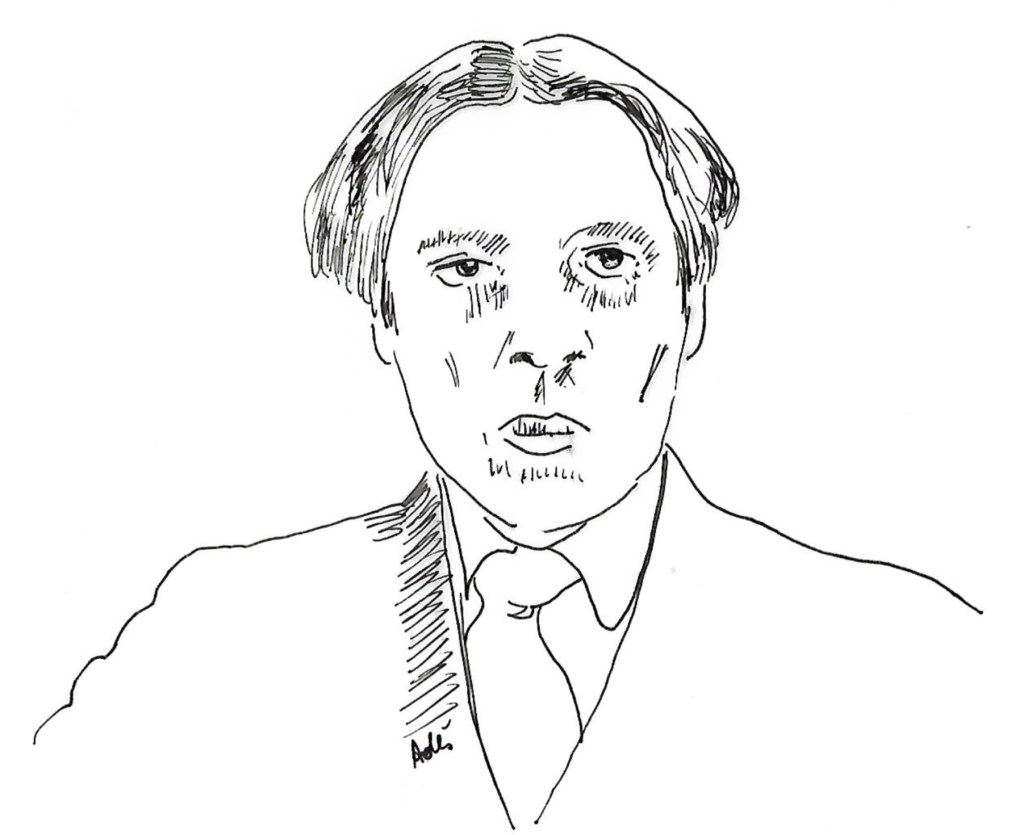
At the École Normale de Musique de Paris, on 21 and 24 march 1958 and 8 June 1959, Alfred Cortot recorded this commentary with musical examples explaining Beethoven’s ‘Appassionata’ Sonata. Here is the English transcription by Bruno Pancek and Roy Howat.
Special thanks to Inbar Rothschild.
10’-16’
Beethoven himself has given the interpreter (on this fabulous work that is the “Appassionata”) the most helpful figurative argument for its imaginative comprehension, when, in answer to his biographer Schindler’s question about the nature of the feeling of the piece, he said: “Do read Shakespeare’s Tempest a second time.”
And even though it is insufficient to rely on material images, evoked by references to a title implicitly subjective of nature’s violence (as is the case for many performers, either ignorant or forgetful of the original symbolic postulate from which it appeared, making it only a complementary element of its intense spiritual signification), it is nevertheless to the representation of a hurricane that we should hold our translation.
But the ‘tempest’ takes part in the heart of the great musician, more importantly than in the impetuous swell of sonorities. Because, like Prospero from the magic play (possessor of magic spells that permit him to command winds and seas), it is in reflection of his personal torment that he lets loose the thunderbolts and gusts of the two fast movements that open and complete the sonata, reserving for the central Andante the sense of a metaphysical significance, messenger of peace and concord. And by the poetic devolution of which he seems to have been granted the representative privilege, there is no doubt that he is making a bitter confession of private passion, raised by the circumstances to its highest point of exaltation in the moment where he undertakes the notation of these immortal pages.
We are speaking here of the no less immortal beloved, of whom we learnt recently all the reasons to be able to identify her name as one of the Count of Brunswick’s sister, presumably Josephine, widow of
Count Haene, already mother of four children and who (according to her sister Thérèse) had the wisdom of saying no to the adventurous dream caressed by Beethoven.
The musical examples accompanying those preliminary comments to a more profound study of the Beethovenian message, don’t pretend to interrogate the accents under the ambitious aspect, neither to penetrate the shivering human secret. They will limit themselves to suggest the behaviours of the movements, timbres and accentuation, in agreement with the postulate of physiognomic order which has to propose itself to the executant’s intention. For more clarity, we will isolate every elements of the musical proposal before gathering them into a more developed example aiming to take into account their eloquent expressive correspondences of the organic structure of the first movement.
We will first extract from it this surprising entry of the mysteriously incantatory character of the generating theme whose impulsive elan dully stated emerges from the instrument’s depths to materialize at the top of his art in the ascending movement on the incisive tension of a trill voluntarily shortened which should carefully played, without confusing it with a pianistic ornament over-added, but rather a sort of interrogative vibration of enigmatic character. Characteristic prefiguration of the four bars immediately repeated by the impressive and audacious virtuoso pattern which consist on reproducing them, after a respiratory suspense of a few beats which should not be shortened, not on the dominant (as tradition would imply) but with the dramatic insistence conferred by a sudden mutation to the unpredictable tonality of G flat. Here we draw the performer’s attention to division into two distinct segments of this fundamental proposal to which the ulterior thematic argumentation will borrow the elements of impressive expressive contrasts to the enunciation of which will correspond the breve following demonstration (musical example)
16’40 to 17’15
Then, as answering to the call of a fateful objurgation and following a fierce burst of rushing sonorities sweeping the keyboard throughout its entire compass, it will be on a constructive “plan” imperiously asserted, the explosive irruption of the propellant theme definitely established on the “plan” of a stormy vehemence which will now govern the ulterior development of the movement. (musical example)
18’-19’05
And here is, coated with an accent of subjective expansion which differentiate it momentarily the expression of the one of the two previous episodes but involving the notion of sentimental devastation which often denature the warm tradition and which hold here the complementary role of the second idea (provided that we can grant to the constantly renewed argumentation of a feverish dramatic poem from a single “visit”) the traditional approaches of the sonata form. And in the form of an astonishing expressive transformation of the proposal, a new generating element of the composition supported by the quivering stirs of the bass pattern whose insistent animation maintains the hectic rhythm of repeated quaver-triplets from the previous fragment. (musical example)
19’45 – 20’30
At last and reminiscent from the melodic inflection accompanying the characteristic enunciations of the incorporated trills of the generating theme’s exposure; it will be the vigorous profusion of semiquaver sextuplets chanted by the impetuous pounding of the three notes, devolved to its original behaviour, here is the last thematic element of the fabulous development which will now oppose them or chain them each other in a constant spirit of exalted ardour. (musical example)
21’08 – 22’
We tried in the previous examples of details to underline for the performer the character of dramatic intensity which seems to us to agree to the enunciation of the P dynamics written by Beethoven along the successive exposure of the generating themes and which shan’t be considered as a too much pronounced erasure. It is not useless now to demonstrate this in an example meant to reunite them under cover of the quivering pathetic conflict which would have imply to link them one to the other in only one organic element of the Beethovenian intention. (musical example)
24’43 – 26’25
Here is now, and following this preliminary disjunction of the various thematic elements (which will integrate into this first movement argumentation) reunited in the sequence prescribed to them by Beethoven’s brilliant and visionary intention; the succession of the episodes constituting the whole of the thematic proposals to which we have devoted the previous detailed examples. All that is left is to translate the acceleration of tempo prescribed by the mention “Più Allegro” for the performance of the splendid coda ending the movement in a pathetic reminder of the 2nd idea, suddenly interrupted by the virulent jerks of a pattern of chords imperiously detached and soon followed by a progressive diminution of the sonorities from which the evanescent vibrations should be tributary of no added ritardando, and considered at the hectic pace of the last fragment on a basis of 152 to a crotchet. (musical example)
27’40 – 30’10
Andante at 2/4 wrote Beethoven and not Adagio (we think important to remind) and which we’ll consider the pace around 50 to a crotchet. It would suffice here of a weak imaginative effort, having in mind the words of Beethoven to Schindler, to be able to assign to this
intermediate movement the supranatural powers, of this music solemn and pacified at the same time, by which the wise Prospero undertakes to restore calm to the troubled spirits of the Tempest’s characters. By allowing the exceptional means entirely detached from contingencies of exterior sentimentality and expressionism, of those three musical metamorphoses in Variation form which originate in the low register of the piano, in a static rhythm, rising progressively from octaves to octave in sounds ever domains more and more immaterial (‘Mehr licht’ as Goethe said, as his death approached), to the meditative inflections of the final fragment that preceded the feverish irruption of the Allegro finale. One would wish that each of the succeeding figurative transformations is sufficient to warn any performer against any demonstration of exaggerated sensitivity or of virtuosic brilliance that might result from a lack of reflection. (musical example)
34’48 – 36’54
The indication Allegro ma non troppo, written by Beethoven at the head of this stormy finale, is intended only to ensure that performers do not overlook the melodic nature of the semiquavers (allusively derived from the generating theme of the first Allegro) and transform it (as happens, alas, all too often), into an exercise in finger velocity devoid of any dramatic value. It will be enough to stick to the pace recommended by Czerny (whom played the first performances under Beethoven’s guidance): 132 at the crotchet, convincing ourselves that the added “non troppo” was only a precaution against virtuoso demonstrations. One should thus not hesitate to give vivid rhythmic character to the strident jerks of the diminished chords which abruptly overturn any link with the closing bars of the preceding andante, while articulating the outline of the semiquavers over the disquieting murmur of a threatening swell, intertwined, one might say, in the distant cries of lost souls. We should not at all restrain its deliberately impetuous character. (musical example)
37’56 – 38’46
We would also like to attract the performer’s attention on the pathetic character which should be reserved to the translation of the admirable central episode, in which the weeping interjections of a panting melody running into irritated answers of a group of imaginary furies on a contrast of timbre and accentuation which relate them to Orpheus’s supplications looking for Eurydice and the insensitive answers of the infernal deities. It is here, with regard to the emotional eloquence, the climax of expression reserved by Beethoven to the translation of this finale. (musical example)
39’35 – 41’23
It is obvious that we mustn’t foresee the definitive performance of this movement without adopting the two repeats prescribed by Beethoven the one and the other absolutely compatible with its stormy fundamental tendency. We shall take care of reserving to the accel (that precedes from a few bars the irruption of the concluding presto) a character of excitement from which the imagination will have to take a part at the very least equal to the tumultuous testimony of the fingers.
As for the Presto, kind of demonic pandemonium in which the furious hammering of the 2 chords ff written at the beginning of each repeat see themselves suddenly transformed into precipitated scratches of the keys by the nervous fingers in a smothered dynamic which intensifies its meaning, it appears to us that their enunciation should be considered at 92 and 96 to the minim so at the bar, hectic tempo that should be preserved or even accelerated till the conclusion of this prodigious sound upheaval.
 Sofronichrist
Laisser un commentaire